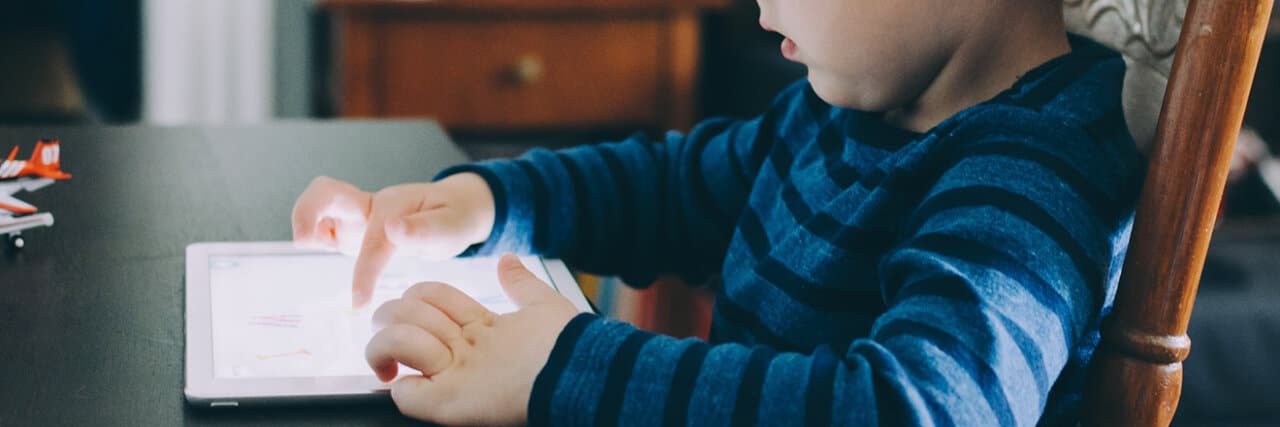
A Connecticut high school is using an online learning platform in its Learning Lab to support students at risk of not graduating and to offer additional support for students with special needs. Officials say the program can be customized to meet students' individual learning needs.
This article highlights how two school districts are using technology to better communicate with parents. Efforts include making student information available online and providing more real-time communication services with parents.
Textbooks alone will not allow teachers to meet the goals of Common Core State Standards in social studies and history, educator Mary Janzen writes. In this blog post, she shares how she uses digital resources to teach social studies and history and prepare students to be "civic-life ready."
Preschool programs that teach self-regulation skills may help boost student achievement in math and other subjects, according to a recent study published in Early Childhood Research Quarterly. Researchers found that such lessons produced even better results among disadvantaged students.
Teacher leadership is valuable for student achievement and the teaching profession, writes Sean Slade, director of whole child programs at ASCD. Still, greater planning, purpose and intent is needed for effective teacher-leadership models, he writes in this blog post.
Learning devices of the future will allow for anytime, anywhere learning and allow students to share data and material more easily across devices, according to a young innovator, a futurist and the CEO of the One-to-One Institute. In this article, they speculate about what classrooms will look like in the future.
"Despite being a fairly universal goal of educators and education systems, producing lifelong learners is not a process that has a set of concrete steps," writes Inservice guest blogger Kelly Morgan Dempewolf.
Students with older siblings performed better on primary-school tests and the General Certificate of Secondary Education, according to a recent study. The researchers from the University of Essex call this trend the "spillover effect."
Educators and students in the southern African country of Lesotho now have more access to homework lessons and quizzes, thanks to a pilot programme. The programme includes teacher-approved lessons in subjects such as maths, geography, English and agriculture.
More than 25% of students in Hong Kong are overweight or obese, according to a University of Hong Kong study. Researchers found that lower fitness levels could be attributed to the focus there on academics.
Schools have an obligation to be mindful of the workload they place on students' shoulders, writes Thomas Bonnell, teacher and administrator in schools.